
Offshore Marine Industry
Home > Industries > Offshore Marine
Clayton Industries Supports the Offshore Marine Industry
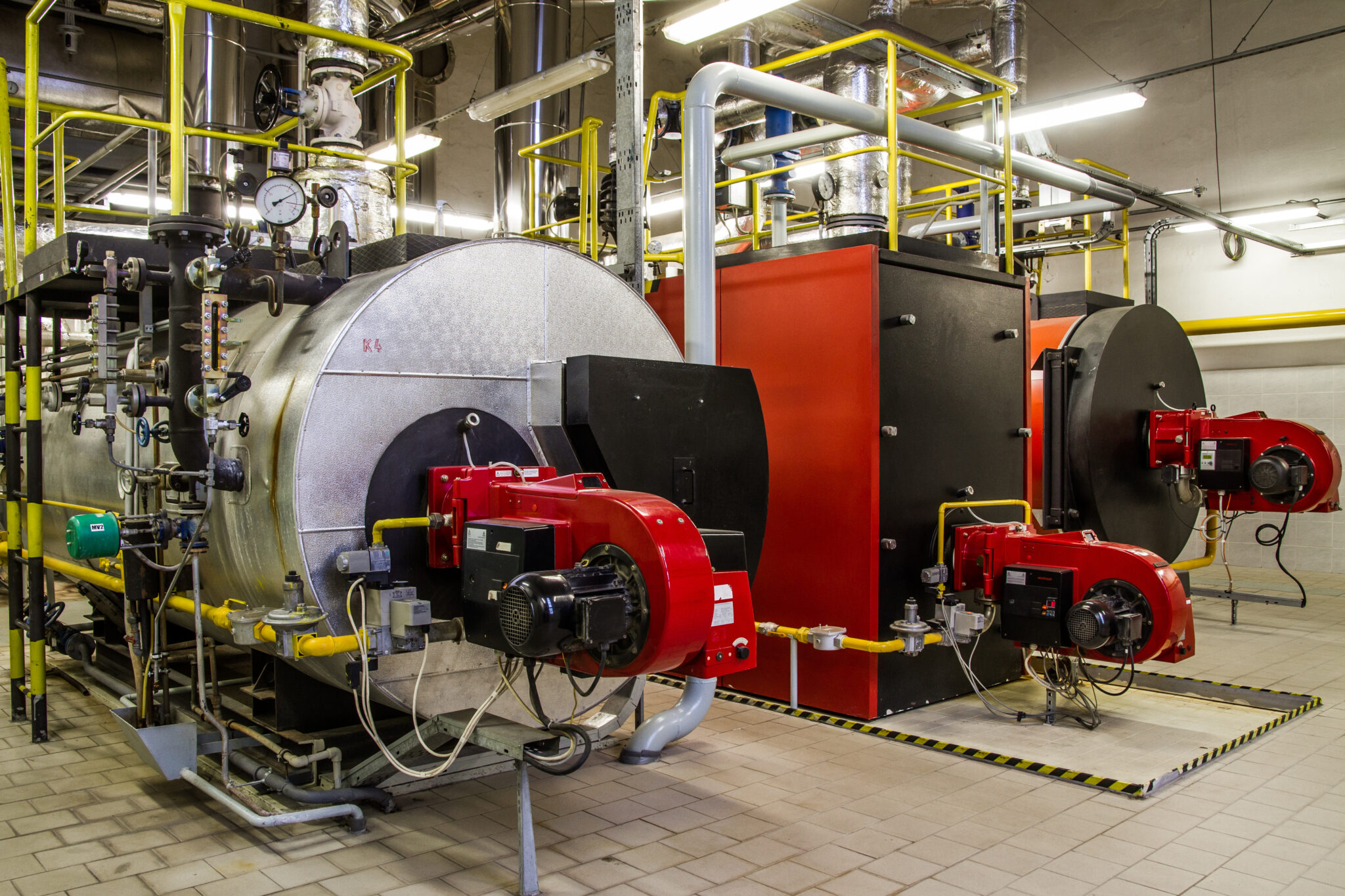
Steam has been a longtime player in the offshore and marine industry, being utilized in a wide range of applications. While its most common use is typically reserved for warming of the heavy oil fuel utilized in propulsion engines, steam is also used for what is commonly referred to as “hotel services” onboard a ship. This typically includes heating of cabin quarters, provision of hot water, and cooking, as well as a desalinization process to create a supply of fresh water.
Another unique application for the marine industry is the use of Exhaust Gas Boilers, also commonly referred to as EGBs. Exhaust Gas Boilers are able to be utilized with regularly on ocean going vessels, capturing the radiant heat and exhaust fumes of a ship’s propulsion engines and transferring it into a regular supply of steam. EGBs are commonly used in conjunction with a back up boiler of a more traditional design, to provide steam when a ship is at port.
In the case of the offshore drill rigs, steam also plays a vital role. In addition to the heating of fuel and hotel services mentioned above, steam can be used for Thermal Enhanced Oil Recovery (TEOR) as part of the production process, as well as both stimulation and dewaxing of oil wells. The industry also makes use of immersion heaters during this process to heat natural gas or crude oil, which is crucial to separating water from the oil or gas as it is pumped out. Steam is also used as part of the deicing process on oil wells, preventing the dangerous buildup of ice in colder weather locations.
Clayton has long been the boiler of choice of the offshore and marine industry. Claytons Exhaust Gas technology has been specifically designed for use on the diesel and heavy oil engines that are so common to the industry. In addition, the Clayton design takes up less than one third the floor space of a traditional boiler, making it an ideal choice for ships and oil rigs where physical space is at a premium. Clayton’s coil tube design also does away with a boiler’s traditional water level, ensuring smooth operation and reliability on rough seas.

Key Benefits
Quality Steam
You’re going to need a supply of steam ready to keep up with the versatility of your industry, and Clayton is up to the task, providing a steady supply regardless of changing conditions.
Range of Products
Looking for an Exhaust Gas Boiler? Or perhaps one of our more conventional designs? Whether you choose one, or both, Clayton has products guaranteed to suit your industry requirements.
Compact Design
Whether at sea or on an oil rig, space is at a premium. Clayton’s compact design takes up less than a third of the space of a traditional firetube, making them the perfect choice for the industry.
Featured Case Study
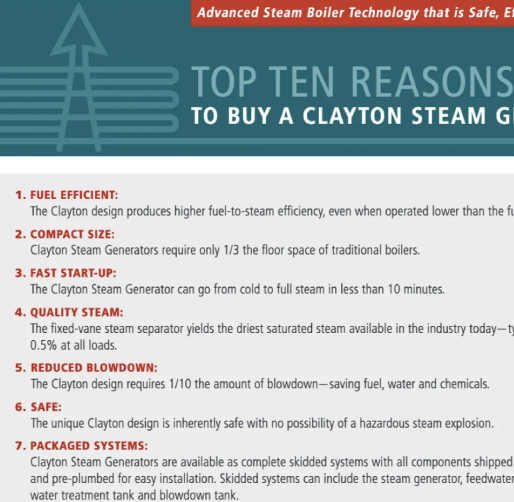
Top 10 Reasons To Buy a Clayton Steam Generator
1. FUEL EFFICIENT:
The Clayton design produces higher fuel-to-steam efficiency, even when operated lower than the full firing rate.
2. COMPACT SIZE:
Clayton Steam Generators require only 1/3 the floor space of traditional boilers.
3. FAST START-UP:
The Clayton Steam Generator can go from cold to full steam in less than 10 minutes.
4. QUALITY STEAM:
The fixed-vane steam separator yields the driest saturated steam available in the industry today — typically less then
0.5% at all loads.
Frequently Asked Question's
Steam boilers supply heat for fuel heating, accommodation heating, hot-water production, and galley services. Depending on the installation, steam can also support thermal desalination and offshore process heating. Requirements vary with the vessel, platform, and equipment being served.
An exhaust gas boiler recovers heat from engine exhaust to produce steam. Instead of generating all the required heat through a separate burner, it uses energy that would otherwise leave through the exhaust system. Steam output depends on the available exhaust heat and operating conditions.
An exhaust gas boiler depends on engine operation and available exhaust heat. When engines are stopped or provide insufficient heat, a separate boiler can maintain steam services. Clayton describes marine installations that recover exhaust heat at sea and use a fired boiler while in port.
Yes. Producing steam from engine exhaust can reduce the need to fire an auxiliary boiler while underway. Actual savings depend on engine operating hours, available exhaust heat, and onboard steam demand. A vessel-specific assessment is needed rather than applying one savings percentage to every installation.
Steam can provide heat for fuel handling and selected oil-processing duties. Clayton also identifies well stimulation, dewaxing, thermal enhanced oil recovery, and deicing among offshore applications. Each duty requires a system matched to its process conditions and operating environment.
Calculate demand for each operating mode, including normal operation, startup, and periods with little or no exhaust heat available. Include simultaneous heating loads, distribution losses, and required backup capacity. The fired boiler and heat-recovery equipment should be evaluated together as one steam system.
Ships and offshore platforms often have limited equipment space. A compact generator can help accommodate steam production within those constraints. Clayton highlights its small footprint for marine applications, but installation planning must also include supporting equipment, access for maintenance, and connections to existing systems.
Vessel movement is an important consideration when selecting marine boiler equipment and its supporting systems. Clayton’s coil-tube design avoids a conventional boiler drum water level, which it identifies as an advantage at sea. Suitability should still be confirmed for the vessel’s specified motion and installation conditions.
Yes, where the engine exhaust system, available space, and steam demand make recovery practical. A retrofit assessment should consider the vessel’s operating profile and how the new equipment will work with existing boilers and controls. The objective is to recover useful heat while maintaining dependable steam service.
Provide required steam pressure and flow, operating schedules, available fuel, feedwater conditions, and installation constraints. For exhaust heat recovery, also supply engine operating data and exhaust conditions. Identify essential steam services and backup requirements so the proposal addresses both underway and in-port operation.
Contact a Clayton Representative