
Mining Industry
Home > Industries > Mining
Clayton Industries Supports the Mining Industry
The history of steam and mining dates back to the late 1600s and has been intertwined ever since. The earliest use of steam boilers in the mining industry was to remove water from coal mines. In 1698 the first “steam engine” was patented for this very purpose.
In the 1770s, James Watt, who is wildly regarded as the inventor of the steam engine, made significant improvements to the early steam technology and later developed the crankshaft and flywheel. Watt’s steam engines were still almost exclusively deployed in the mining industry. A few years later came the steam locomotive, which at first was mostly used in the mining industry to haul coal. These early inventors discovered that they could use the expanding nature of steam to create motion. The great steam locomotives of the 1800s and early 1900s all had their roots in the need for the mining industry to pump water out of the mines. Today, steam can be used in the mining industry like any other manufacturing facility, but in the late 1990s a new process was developed that has some significant advantage, for some ores, over smelting and refining.
Pressurized oxidation and acid leaching is increasingly used for the extraction of gold, nickel, copper, molybdenum and other high value metals. The process uses a multistage autoclave where the ore, acid and oxygen are heated to high temperature to extract the metal from the ore. The autoclave is normally heated with medium to high pressure steam, starting the extraction process. Once the process begins, it is exothermic, but occasionally the process requires additional steam heat to keep the process running, which must be delivered extremely quickly.
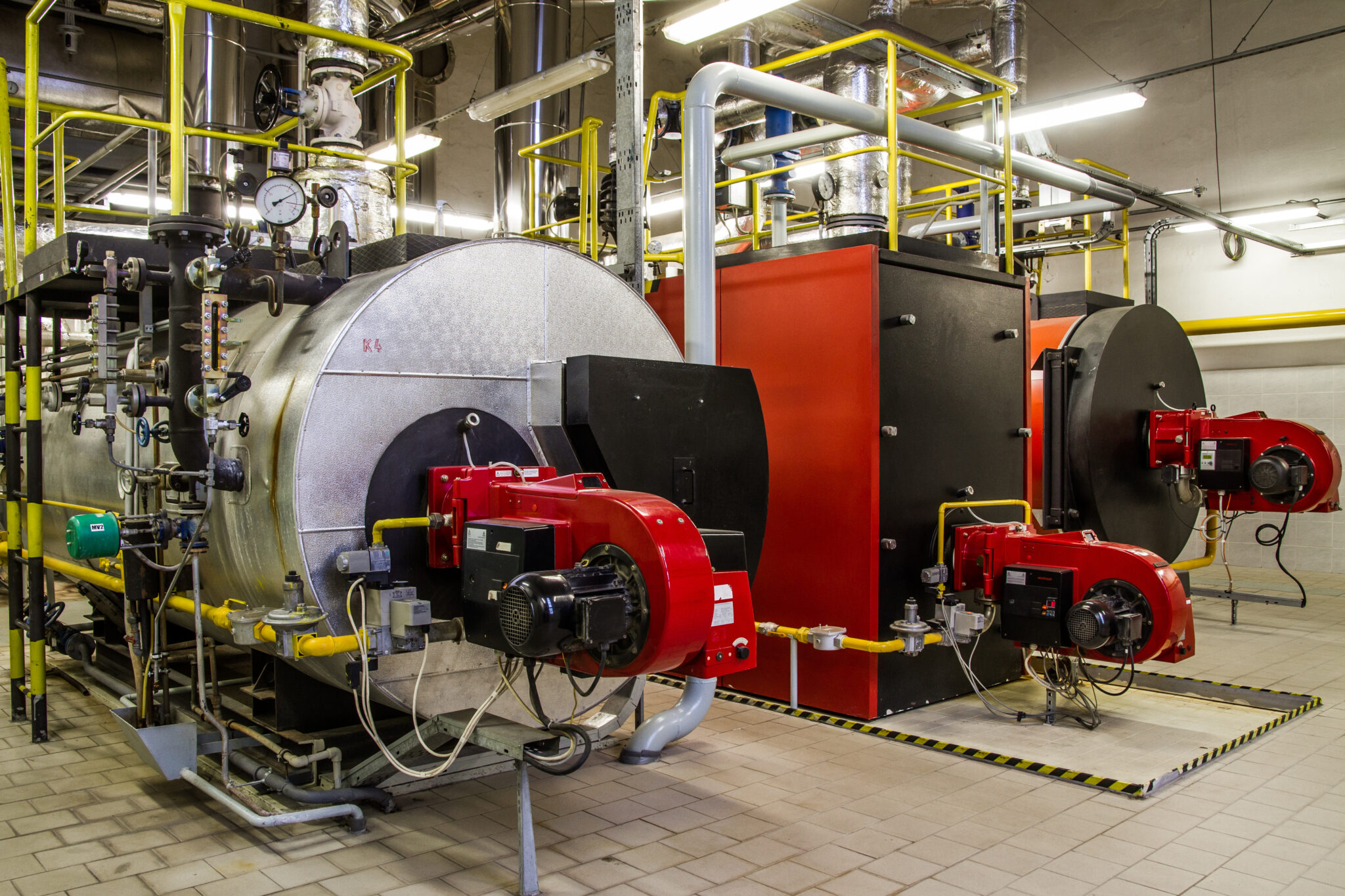
Clayton Steam Generators are in operation at mining companies around the world to provide start-up and supplemental steam heat for pressurized acid leaching. The Clayton boiler is ideally suited for this application due to its fast start-up capabilities. When the process needs additional steam heat, the Clayton Steam Generator will respond almost instantaneously with the volume of steam needed. Clayton boilers are also available at high pressure, if the mining operation calls for high temperature leaching.

Key Benefits
Compact Design
Clayton’s design takes up less than one third of the floor space of a traditional firetube boiler, making them ideal for spaces where space is at a premium.
Inherent Safety
The coil tube design of the Clayton Steam Generator completely eliminates the possibility of an explosion, keeping your employees safe and your operations running.
Rapid Response
Regardless of your demands, Clayton is up to the challenge, ready to rise and fall to match your demands without sacrificing quality.
Featured Case Study
Clayton steam generators help a college campus provide on-demand, fuel-efficient heating.
The Colorado School of Mines, a public research university focused on environ- mental science and engineering in Golden, Colorado, had been utilizing steam to heat their campus for a majority of the time, since their conception in 1874.
Yet in recent years, the school had not been using steam from their own boiler room.
Instead, they were purchasing steam from the Coors Brewing Company facility down the road. The equation was simple: the Colorado School needed steam, and the Coors facility was creating excess steam. By building a series of vaults with pipe conduits connecting the Coors’ plant to the campus buildings, they could divert their surplus steam to the school – allowing the campus to relinquish their boiler room duties, and Coors to get some extra cash.

Frequently Asked Question's
Steam boilers provide process heat for mineral extraction and related plant operations. Clayton specifically highlights startup and supplemental heating for pressure-leaching autoclaves, where a dependable steam supply helps establish and maintain the required processing conditions.
Steam supplies heat to bring the ore-processing system to its required operating temperature. The amount of external heat needed depends on the ore, reaction chemistry, and process design. Some operations require steam mainly during startup, while others also need supplemental heating during production.
Even when reactions generate heat, changing process conditions can create a need for additional heating. Supplemental steam helps maintain the required operating temperature. The steam system should be designed around both the size of these additional loads and how quickly the process needs them supplied.
There is no universal pressure requirement for mining autoclaves. The process designer must specify the steam conditions needed for the particular extraction method and heating arrangement. Boiler selection should account for those requirements, distribution losses, and control-valve pressure needs rather than use a general mining-industry pressure setting.
Calculate startup, normal operating, and supplemental steam demand separately. Include simultaneous equipment loads, distribution losses, and the duration of demand peaks. This helps distinguish a short heating requirement from a continuous load and avoids selecting equipment solely from average daily steam consumption.
Some extraction processes need additional heat quickly when operating conditions change. A responsive steam generator can help supply that demand without a prolonged wait for steam. Clayton identifies fast startup and response to supplemental heating loads as key benefits for mining applications.
Assess available fuel, electrical supply, feedwater quality, site altitude, ambient temperatures, and installation access. Maintenance arrangements and spare-parts availability also deserve attention. Confirm the proposed system’s output under actual site conditions, since a standard capacity rating alone does not establish suitability for the location.
Yes, where the process design allows it. Steam released as hot slurry passes through flash vessels can be directed to preheating equipment, recovering energy that would otherwise be lost. The potential reduction in external heating demand depends on the plant’s heat balance and recovery arrangement.
The choice depends on demand variation, maintenance needs, and the consequences of a steam interruption. Multiple units can provide operating flexibility and backup capacity. However, full redundancy requires enough remaining capacity to meet the specified essential load when one unit is unavailable.
Repair leaks, maintain steam traps, insulate distribution piping, and keep combustion equipment properly tuned. Evaluate suitable condensate return and heat recovery from exhaust gases or blowdown. Assessing generation, distribution, and process use together helps identify savings beyond the boiler itself.
Contact a Clayton Representative