
Food & Beverage Industry
Home > Industries > Food & Beverage
Clayton Industries Supports The Food & Beverage Industry
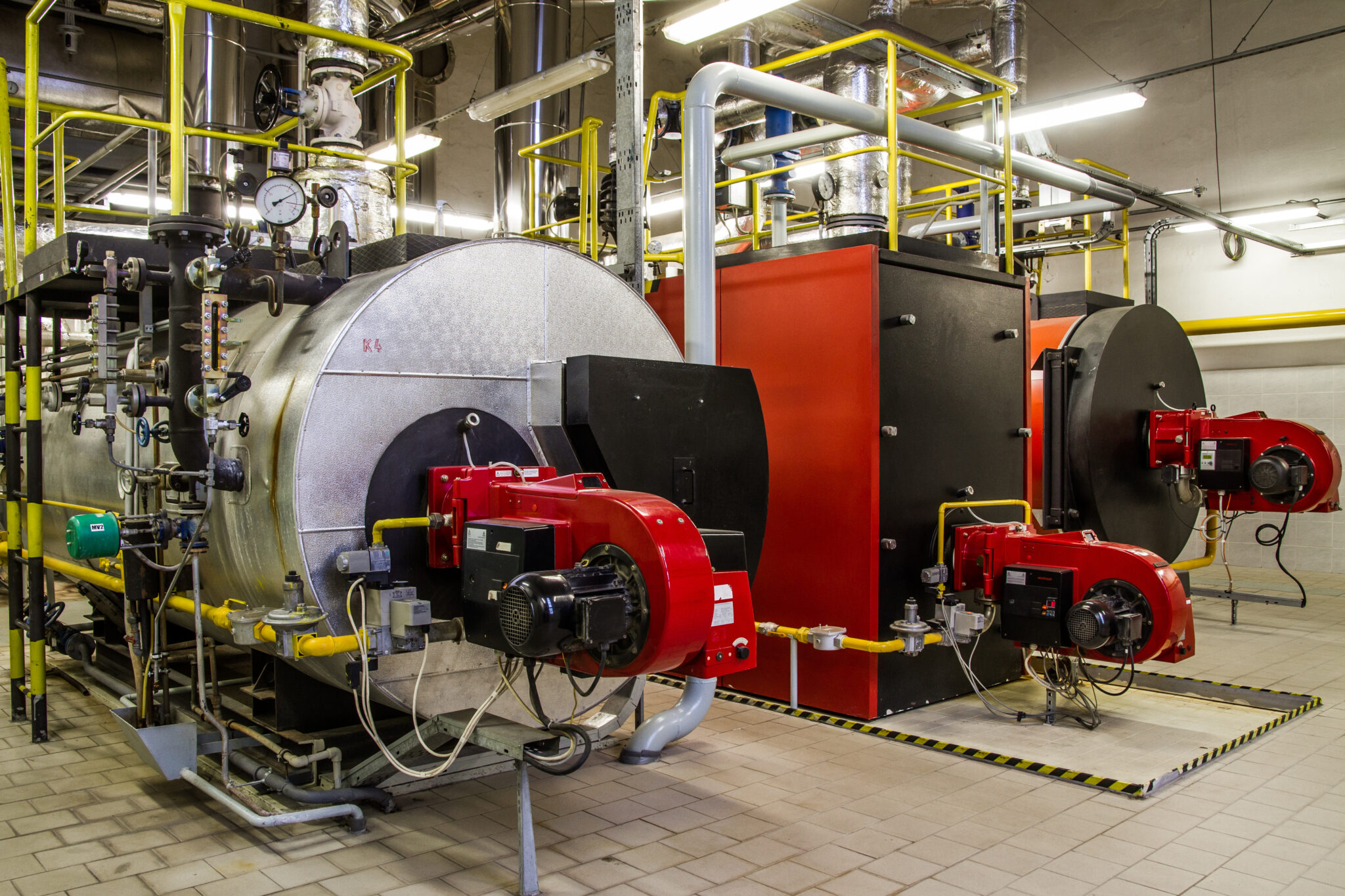
Steam is used extensively in food and beverage manufacturing, likely the largest utilization of steam of any industry. From the beginning of the food process steam is heavily involved. If there are scalding and poultry processing, flash peelers, evaporators, proofing ovens or blanch tanks in your facility, all will require steam.
Steam is the most convenient and economical way to transfer heat energy to your blanchers, evaporators, hot air dryers and pasteurizers. This energy can be transmitted over large distances at a pre-selected pressure and temperature to all users, providing consistent cooking temperatures and repeatable results. Even temperatures and exacting humidity levels are of extreme importance, as ensure quality results throughout.
In much of the process where steam comes in direct contact with food or with the vessels and surfaces used for heat transfer, there is zero tolerance for chemical contaminants. Steam is the best possible choice for this application, as its status as a vapor means that is sterile by nature and simply cannot contain contaminants of any kind. When manufacturing food, steam can be considered an active ingredient in the recipe and is the reason high quality steam with less than a single percentage of moisture is so important to the industry.
Steam is also used in jacketed kettles, heat exchangers, hot air dryers, smoke ovens and curing rooms and many processes which do not come in direct contact with food products.
Often CIP, or Clean In Place, automated systems and processes are used to clean both the interior and exterior of piping systems, food and beverage process pipes, processing vessels, tanks, spiral freezers, mixers, fermenters, bio reactors, blenders, homogenizers, roasters without the dismantling the system.
With steam integral to every aspect of the food and beverage process, look to Clayton Industries for highest quality steam on the market. Our built in Steam Separator will ensure you get the result you need, while our fast response and low cost of ownership will save your time and money.

Key Benefits
Clean Steam
Clayton Steam Generators offer culinary grade steam, providing with a source of heat and sanitization that is free from contaminants and safe for use with products for human consumption.
Rapid Response
Clayton Steam Generators can reach full output in under ten minutes, and respond flawlessly to surges in demand, minimizing your downtime and eliminating the need for a boiler on hot standby.
Lowest Cost of Ownership
Clayton’s counterflow heat exchanger and forced water circulation provide you with industry leading efficiency, lowering your fuel costs and leaving more money in your pocket.
Featured Case Study
Clayton’s Steam Technology Saves 2 Million Pounds Of Perfect Tomatoes
Seaside Farm Lost 8% Of Its Tomato Crop Each Year Because It Was Too Ripe To Ship.
It’s all about the tomato,” says Ross Taylor, a fifth-generation heir of the family tomato farming business, Seaside Farm. Based on Saint Helena Island in South Carolina, every year the family sells 20 million pounds of their tomatoes to restaurateurs and local grocers mostly along the East Coast.
“We pick them mature green. We can’t ship a ripe tomato,” said Mac Sanders, Ross’s uncle and one of the family’s current crop of patriarchs. Tomatoes ripen to their luscious red color naturally when the plant produces ethylene, an odorless, tasteless chemical.


Featured Case Study
Full Steam Ahead
In the late 1970s, Americans were going nuts for pistachios.
After the American pistachio proved it could succeed in California, its popularity grew exponentially, and everyone wanted to get into the production business. This opportunity did not go unnoticed by the Seeon brothers—Joshua and Morris— who had been selling fresh nuts, seeds and trail mixes in New York since 1959. Seeing the possibilities, they decided to invest in pistachios to help their company grow.
Frequently Asked Question's
Direct heating introduces steam into the product, where it condenses and adds both heat and water. Indirect heating transfers heat through a jacket, coil, or heat exchanger without intentionally mixing steam with the food. The choice affects product moisture, equipment design, and steam-purity requirements.
Yes, when the steam system is designed and maintained for that application. Direct-contact steam must meet the process’s purity requirements, including appropriate feedwater treatment and contamination control. Steam is not automatically contaminant-free simply because it is a vapor. Assess its suitability at the point where it contacts food.
Culinary steam typically uses filtration and moisture separation to prepare plant steam for food-contact applications. Clean steam is generated using controlled-quality feedwater in a dedicated system. The appropriate option depends on the product and process; installing a particle filter alone does not establish that every purity requirement has been met.
Dry steam carries less entrained liquid water, helping maintain effective heat transfer and predictable heating performance. Excess moisture can affect process consistency and downstream equipment. Steam dryness and purity are separate properties, so a high dryness percentage does not by itself confirm suitability for food contact.
Boiler capacity should match the highest realistic simultaneous demand from cooking, pasteurization, evaporation, and cleaning equipment. Include startup loads, distribution losses, and planned expansion. Review minimum demand as well, so the system can operate effectively during quieter periods and between production batches.
The required pressure depends on each machine’s heating duty and design. Use the equipment manufacturer’s specified inlet pressure and steam consumption, then account for distribution losses. Where different processes need different pressures, suitable pressure-control arrangements allow a common steam supply to serve them.
Yes. Steam can supply heat for cleaning solutions or hot water used in clean-in-place systems, which clean internal equipment surfaces without dismantling the equipment. Include cleaning demand in boiler sizing, particularly when cleaning and production overlap. Steam supply alone does not establish that a cleaning cycle is effective.
Yes, provided its capacity and distribution system suit the combined demand. Steam requirements can rise quickly when several processes start together. Clayton highlights rapid startup and response to changing demand for its food and beverage applications; confirm performance against the proposed production schedule.
Repair leaks, maintain steam traps, insulate steam and condensate piping, and keep the boiler properly tuned. Recover suitable condensate where possible to reduce replacement-water and heating requirements. Regular inspections help identify losses across both production and cleaning operations.
Contact a Clayton Representative