
Feed Grain & Animal Science Industry
Home > Industries > Feed Grain & Animal Science
Clayton Industries Supports the Feed Grain & Animal Science Industry
Steam has long been a vital component in the production of animal feed, playing an important role in a process known as conditioning. As part of the production process, steam is injected into the grain mixture in order to add both heat and moisture to the mixture, which provides several benefits.
The first is precision moisture and temperature control, which results in an ideal product consistency. Two little moisture results in a dry, flaking product, one that can crumble away. Conversely, too much moisture can result in a product that breaks down and clogs production lines, as well as quickly becoming susceptible to mold and rot.
Another benefit is that the steam acts as a form of contamination control, preventing the growth of any bacteria, fungus, or pathogens that may otherwise have a chance to develop, ensuring the health of the animals it will be feeding. This process also results in another procedure known as gelatinizing. Gelatinized feed, the result of ideal moisture levels, results in a product that is ideal for animal consumption, ensuring that the nutrients are more easily absorbed by the animal. This both stimulates growth and weight gain, as well as ensuring that as little nutrients pass through the animal in the form of waste as possible.
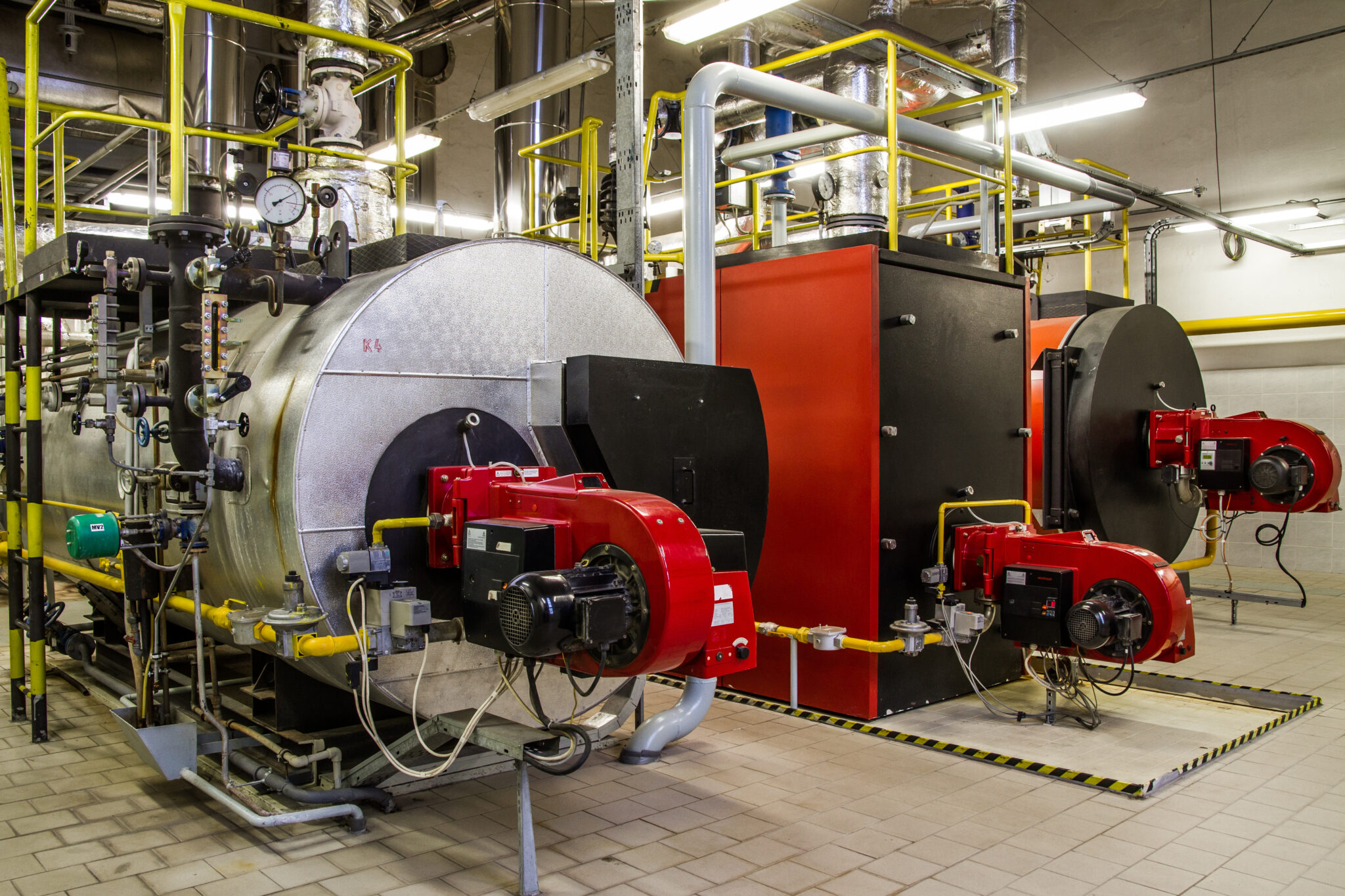
Clayton Steam Generators have been working in conjunction with the industry for well over 50 years. While a traditional firetube boiler may carry over slugs of water in its feed supply, Claytons precise temperature control and high steam quality ensure ideal conditioning and prevents equipment shutdown on the production line, regardless of firing rates or changing load conditions. Additionally, Clayton’s high efficiency design lowers fuel costs keeps facilities running at peak optimization.

Key Benefits
Precision Control
Trust Clayton Industries to provide an unmatched level of control over your moisture and temperature levels, ensuring ideal product quality every time.
Perfect For Sanitization
Clayton’s Boilers deliver clean, quality steam, ideal for sanitization and purging any potentially harmful bacteria, contaminants, or fungus, to ensure the health of animals during its consumption.
Lowest Cost of Ownership
Clayton’s high efficiency design is guaranteed to lower your fuel bill and decrease your operational costs, leaving more money in your pocket.
Featured Case Study
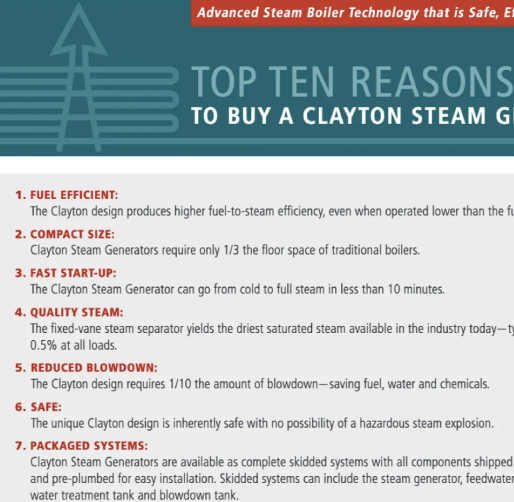
Top 10 Reasons To Buy a Clayton Steam Generator
1. FUEL EFFICIENT:
The Clayton design produces higher fuel-to-steam efficiency, even when operated lower than the full firing rate.
2. COMPACT SIZE:
Clayton Steam Generators require only 1/3 the floor space of traditional boilers.
3. FAST START-UP:
The Clayton Steam Generator can go from cold to full steam in less than 10 minutes.
4. QUALITY STEAM:
The fixed-vane steam separator yields the driest saturated steam available in the industry today — typically less then
0.5% at all loads.
Frequently Asked Question's
Steam boilers supply heat and moisture for conditioning feed before pelleting and preparing grain for steam-flaking. During conditioning, steam mixes with the feed ingredients to achieve the temperature and moisture levels required for the next processing stage.
Steam conditioning combines heat, moisture, and time to prepare feed for pelleting. Proper conditioning helps activate natural binders and supports consistent pellet formation. Results depend on the formulation, mixing, and retention time, so steam supply must be coordinated with the conditioner and pellet mill.
Dry steam delivers heat without introducing excessive liquid water into the conditioner. Wet steam can upset the balance between feed temperature and moisture, contributing to pelleting problems. Maintaining steam quality at the point of use is therefore as important as producing suitable steam at the boiler.
Excess moisture can make feed difficult to process and contribute to equipment blockages. Too little moisture can also produce a dry, crumbly product. Consistent conditioning requires control of both moisture and temperature rather than increasing steam flow without checking the resulting feed conditions.
The required conditions depend on the feed formulation, conditioner design, throughput, and processing objective. Heat, moisture, and retention time work together, so there is no single setting suitable for every feed product. Establish operating targets with the equipment supplier and verify performance using the actual formulation.
Steam conditioning can support microbial reduction when the feed reaches the required temperature for sufficient time. Effective treatment depends on uniform heating and controlled retention. A boiler alone does not guarantee pathogen elimination; the complete conditioning process must be validated for the intended microbial reduction.
Boiler capacity should reflect the simultaneous demand from pellet conditioners, grain-processing equipment, and other steam users. Include production throughput, startup requirements, distribution losses, and planned expansion. Evaluate both peak and minimum demand so the selected system can serve the mill across its operating schedule.
Yes, provided the generator and distribution system can meet the combined demand. Starting or stopping individual lines changes the steam load, making responsive controls important. Clayton identifies consistent steam quality under changing loads as a key feature of its feed industry systems.
Repair steam leaks, replace faulty traps, and insulate distribution piping to limit heat loss before steam reaches the conditioner. Maintain burner performance and feedwater treatment, and assess suitable heat-recovery opportunities. These measures help reduce energy waste while supporting consistent conditioning.
Contact a Clayton Representative