
Cosmetics Industry
Home > Industries > Cosmetics
Clayton Industries Supports the Cosmetics Industry
Cosmetics are a vast and multifaceted sector, manufacturing a staggering number of products that cover haircare, makeup, skincare, and other grooming essentials. With so much to produce, industry counts on the production of steam to play a critical role in their process.
As you would expect from an industry specializing in products that its users come in close physical contact with, sterilization plays a large part in the industry, and there’s no better sterilization agent than steam. From equipment on the line, to the container holding product, right down to raw materials themselves, everything needs sterilization to protect it from harmful microorganisms and adhere to strict regulatory standards.
Steam is also used to achieve ideal temperatures during the mixing process, to achieve perfect heat levels during mixing or melting, as well as being used to extract essential oils for plant based products, a process usually carried out by jacketed kettles. Steam can also be used for temperature control during emulsification, a process where oil and water based products are combined, which is common when making lotion. Consistent heat is key to achieve the desired texture, stability, and overall quality of a finished product. Steam also helps to balance humidity levels in work spaces, ensuring that products are manufactured under ideal conditions, as well is in vacuum filling during the packaging process for liquid or more viscous products.
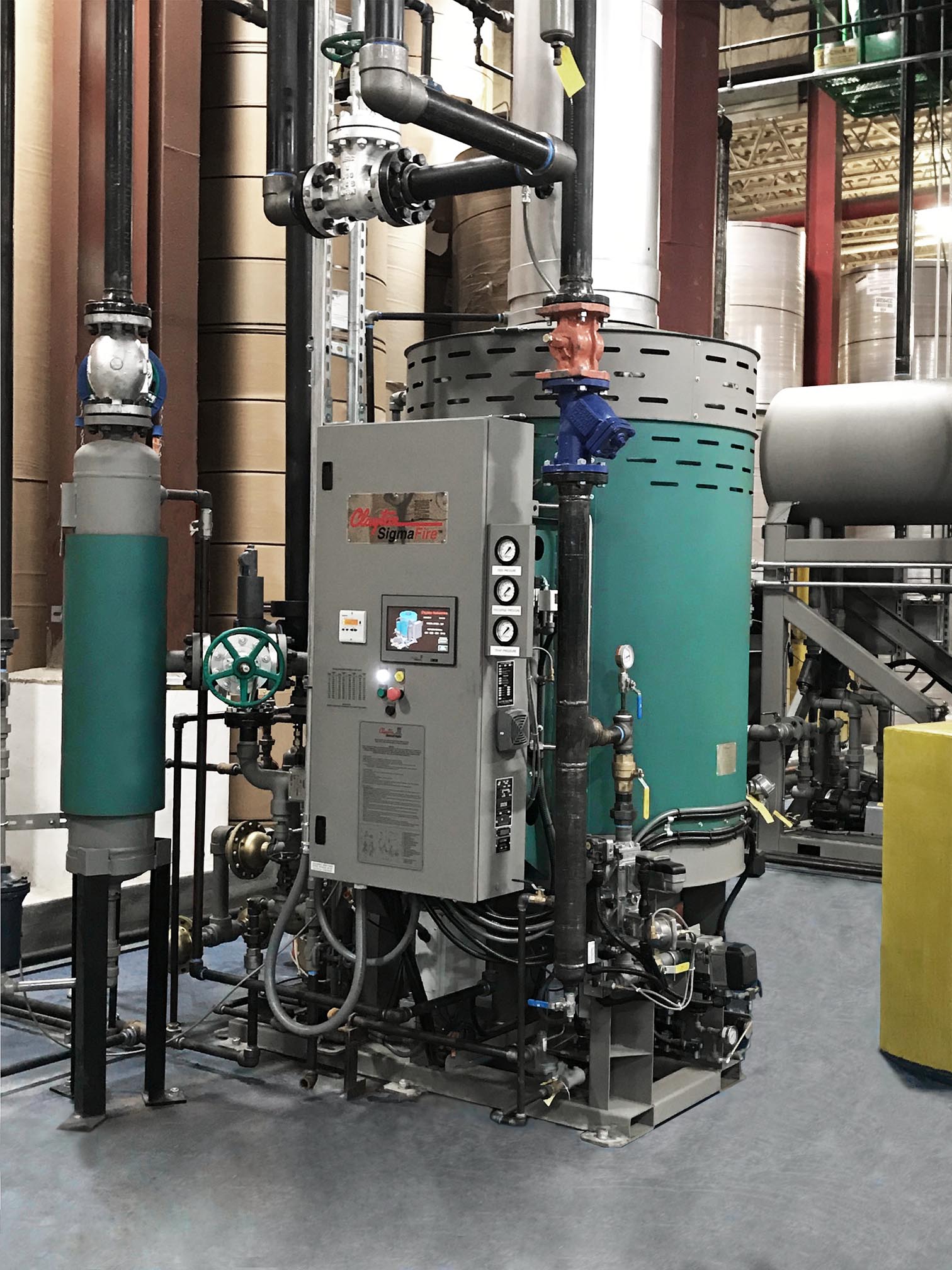
With temperature control of such vital importance, you can count on Clayton Steam Generators to provide a source of stable, high quality steam, perfectly suited to the production of cosmetics.
Key Benefits
Clean Steam
Clayton Industries offers steam that is completely free of contaminants and biological residue, making it perfectly suited to meet the cosmetic industry’s standards for sterilization.
Precise Control
Clayton steam generators offer unrivaled levels of precision and control over pressure, temperature, and moisture content, all at the push of a button.
High Efficiency
Clayton’s products offer industry leading efficiency, lowering your operational costs and keeping your facility running at peak optimization.
Featured Case Study
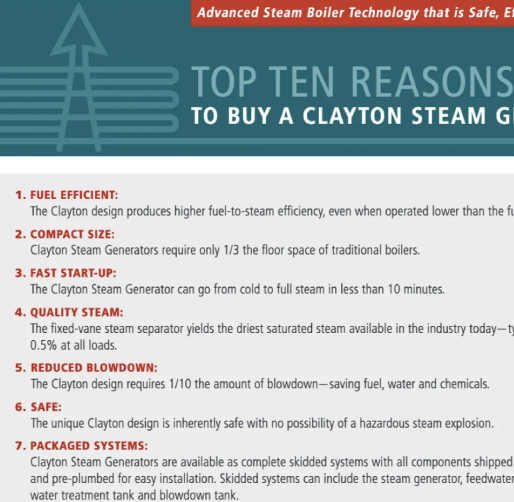
Top 10 Reasons To Buy a Clayton Steam Generator
1. FUEL EFFICIENT:
The Clayton design produces higher fuel-to-steam efficiency, even when operated lower than the full firing rate.
2. COMPACT SIZE:
Clayton Steam Generators require only 1/3 the floor space of traditional boilers.
3. FAST START-UP:
The Clayton Steam Generator can go from cold to full steam in less than 10 minutes.
4. QUALITY STEAM:
The fixed-vane steam separator yields the driest saturated steam available in the industry today — typically less then
0.5% at all loads.
Frequently Asked Question's
Steam boilers supply heat for ingredient melting, mixing, emulsification, and essential oil extraction. They can also support equipment sanitation where the process calls for steam. These applications help manufacturers control production temperatures for skincare, haircare, and other personal care products.
Steam supplies heat to processing vessels during ingredient preparation and emulsification. Controlled heating helps bring the oil and water phases to the temperatures required by the formulation. Consistent temperature control supports the intended texture and stability of the finished cream or lotion.
In an indirectly heated vessel, steam transfers heat through a jacket, coil, or heat exchanger without intentionally mixing with the ingredients. Direct-contact applications require a different assessment of steam purity. The system should be specified according to how steam is used throughout the manufacturing process.
No. Dryness describes how much liquid water is carried with the steam; cleanliness concerns contaminants. A high dryness percentage does not establish suitability for contact with cosmetic ingredients or product-contact surfaces. Specify both the required steam quality and purity for each application.
Boiler capacity should match the combined demand of equipment operating simultaneously, including mixing vessels, melting tanks, and any steam-dependent cleaning systems. Account for batch heating times, startup peaks, and distribution losses. Also review minimum demand between batches so the system performs effectively across the production schedule.
The required pressure depends on the vessel design, target product temperature, and heating rate. Use the equipment manufacturer’s specifications rather than a single pressure setting for the whole factory. The steam system must account for distribution losses and provide suitable pressure control at each vessel.
Trapped air or accumulated condensate can reduce heat transfer through the jacket. Inadequate steam supply may also limit heating performance. Check the vessel’s steam controls, air venting, and condensate drainage before concluding that a larger boiler is needed.
Yes. Steam is used in essential oil extraction for some plant-based cosmetic ingredients. The extraction equipment and operating conditions should suit the botanical material and the desired oil characteristics. Clayton identifies essential oil extraction as one of its cosmetics industry steam applications.
Yes, if the boiler and distribution system can meet the lines’ simultaneous steam requirements. Assess overlapping batch heating, melting, and cleaning operations when calculating peak demand. If production varies significantly, compare a single boiler with multiple coordinated units to determine the most suitable arrangement.
Repair steam leaks, maintain steam traps, insulate steam and condensate piping, and keep the boiler properly tuned. Recover suitable condensate where possible to reduce replacement-water and heating requirements. Regular inspections help identify energy losses before they become persistent operating expenses.
Contact a Clayton Representative