
Brewing & Distilleries Industry
Home > Industries > Brewing & Distilleries
Clayton Industries Supports the Brewing & Distilleries Industry
Whether you prefer a hoppy pilsner, a hardy stout, a peaty scotch or a sweet bourbon, you will find Steam in the process!
In breweries, steam plays a crucial role in sanitation, cleaning brewing utensils and hard-to-reach areas, while ensuring beer flavors remain consistent. Breweries use steam to boil the wort, which utilizes a great deal of the total energy used in the brewing process.
The most common use is with jacketed steam vessels, which steam is continuously passed through to heat the wort. Most brewhouses have automatic controls to regulate the steam flow and control the temperature resulting in repeatable end products. Steam is also used in a mash tun to steep the grains and convert the starches into sugars, as well as in the fermentation process, to separate the liquid wort from the spent grains.
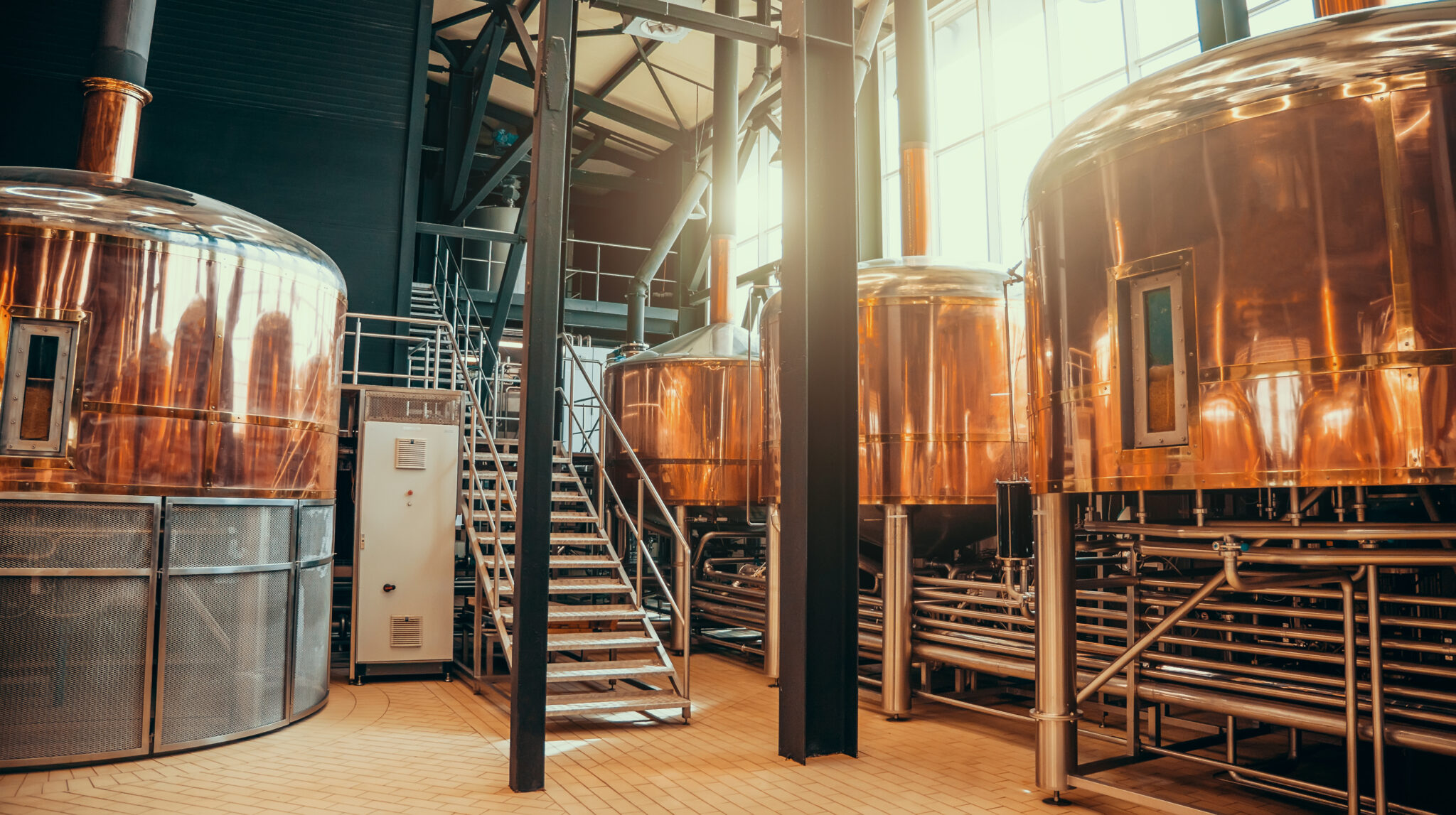
The brew kettle with its internal calandria, or steam heating element, is usually located at the bottom of the kettle. The calandria’s allows for reducing brewing time and increased evaporation rate, which creates a lower chance of caramelization or the possibility of scorching materials along the kettle walls.
Other areas for steam use in the brewing process include heat for the CIP, as well as cleaning and sterilization for casks, kegs, bottles, and barrels.
Distilling allows for even more steam applications, as in the case of boiling points. This is common with ethanol, which boils at 172 degrees Fahrenheit, as opposed to the 212 degrees boiling point of water. A distiller is able to utilize steam to boil mixtures and then use the distillation process to effectively separate these components by capturing vapor produced in the boiling liquids.
For example, a wash of fermented liquid made with barley, water, and yeast, is added to the still at about 8% alcohol. To concentrate the alcohol, heat is added to the wash until it begins to change state from liquid to vapors. Since alcohol boils at a lower temperature than water, that steam is much stronger in alcohol concentration than the wash. The Vapor then travels to the neck of the still where it enters a condenser. That condenser in turn changes it to a liquid, or distillate, before it goes to the spirit safe.
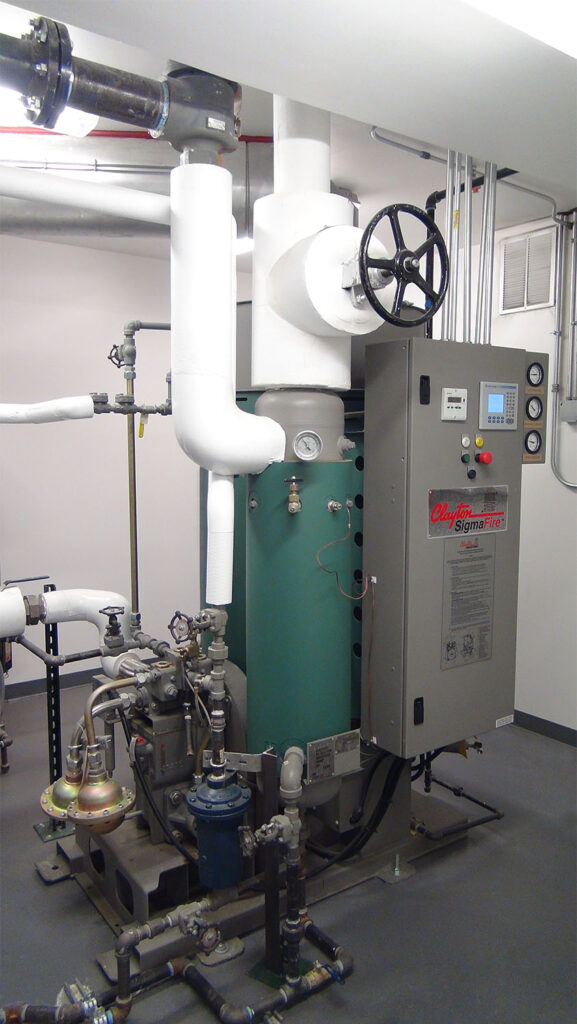
The efficiency of our industry leading Steam Generators deliver high quality pure Steam at constant pressure while reducing your costs, making Clayton Steam Generators the perfect pairing with your beverage of choice!

Key Benefits
High Steam Quality
Clayton Steam generators deliver steam quality in excess of 99% dryness, making it the ideal solution for sterilization and process application.
Rapid Response
Clayton Steam Generators don’t compromise on quality during peak demand, delivering a constant supply of steam regardless of your need.
Compact Design
Space is likely at a premium in your facility, and Clayton’s products take up less than one third of the floor space of a traditional firetube boiler, giving you more physical flexibility.
Featured Case Study
Boulevard Brewing
Boulevard has been “full steam ahead” since its founding in 1988 by John McDonald, a young carpenter with a vision “to make big beers, a variety of beers, beers with color and flavor and aroma and body, beers for real beer lovers.” It’s a passion that began four years earlier with a trip to Europe, when by chance he wandered into a bar specializing in Belgian beers that were remarkably varied in style, compared to the homogenous varieties dominating America at the time.
It took a year and every penny he’d saved to retrofit his live-work space and find the right equipment. The first commercially available brew was a keg of Boulevard Pale Ale, which John carted in the back of his pickup truck to a local restaurant.

Featured Case Study
How Steam Generators Are Driving Production Efficiency And Growth
When it comes to keeping things running smoothly in the beverage industry, reliable steam generation is crucial. Whether it’s producing thousands of gallons of wine daily or crafting small- batch spirits, the right equipment makes a big difference. As showcased in two articles in Project Report, for Bronco Wine Co. and CH Distillery, Clayton steam generators have been key players in their operations.
Bronco Wine Co., located in Ceres, California, is one of the world’s largest wineries, producing nearly 186,000 gallons of wine daily. The company’s significant scale demands a dependable and efficient steam supply for various
Frequently Asked Question's
Steam boilers supply heat for mashing, boiling wort, producing hot water, and cleaning brewery equipment. Steam-heated vessels allow brewers to regulate heat input throughout production, helping maintain consistent conditions from one batch to the next.
Steam boilers provide heat for cooking ingredients, preparing mash, and heating stills. In an indirectly heated still, steam passes through a jacket, coil, or heat exchanger to heat the fermented liquid. The resulting alcohol-rich vapor is then condensed into liquid distillate.
Boiler size depends on batch volume, required heating time, and the equipment operating simultaneously. Include the steam demand of kettles, stills, hot-water systems, and cleaning operations. Selection should account for peak demand and quieter operating periods, rather than relying on production volume alone.
The required pressure depends on the specifications of the kettle, still, or other steam-heated equipment. There is no single pressure suitable for every brewery or distillery. Confirm each equipment manufacturer’s requirements and account for distribution losses when determining boiler outlet pressure and pressure-reducing arrangements.
In jacketed kettles and indirectly heated stills, steam transfers heat through a metal surface without mixing with the product. Some distillation systems use direct steam injection instead. The steam system should be specified for the actual contact method and the process’s steam-purity requirements.
Yes. Steam can supply heat for cleaning-in-place systems and support thermal sanitation of suitable vessels, piping, kegs, and other equipment. Include these operations in the boiler’s demand calculation, particularly when cleaning takes place alongside brewing or distilling.
Yes, if the boiler and distribution system can meet their combined operating requirements. Capacity should reflect which vessels heat up or run simultaneously, including overlapping cleaning cycles. Where demand varies widely, compare a single boiler with multiple coordinated units before selecting a system.
Compact steam generators can be a practical option where production equipment leaves little room for utilities. Clayton highlights a smaller footprint than traditional firetube boilers. Assess the complete installation, including feedwater equipment, water treatment, piping, and maintenance access, when planning the available space.
Repair steam leaks, maintain steam traps, insulate steam and condensate piping, and keep the boiler properly tuned. Recover suitable condensate where possible to reduce the need for cold replacement water. Regular inspection helps identify losses that can increase fuel and water consumption.
Contact a Clayton Representative